
The buying guide
Single-stage vs two-stage snow blowers: which fits your driveway?
Match the machine to the work outside your door: the surface, the space to clear and the conditions you usually face.
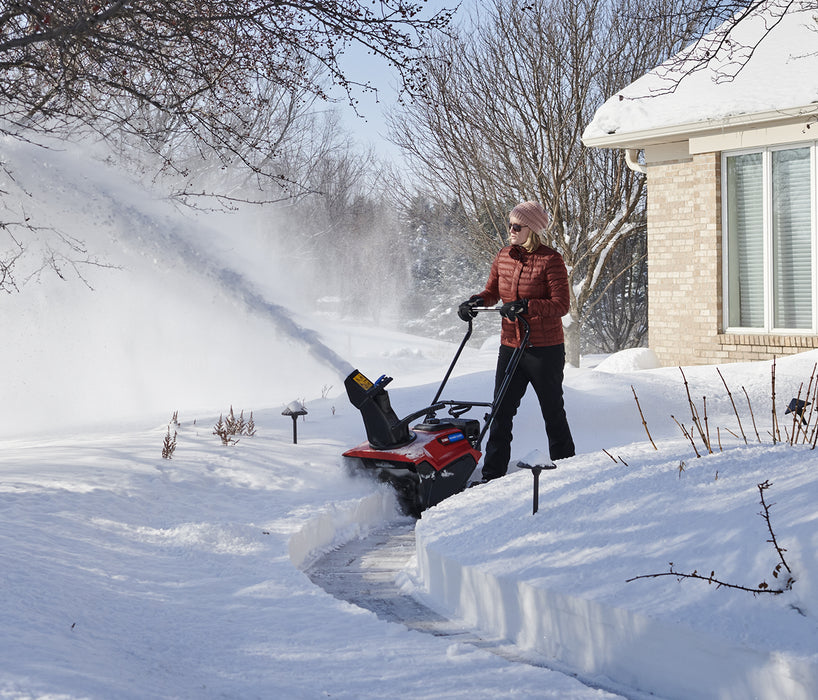
For a smaller paved driveway that you clear regularly, a single-stage snow blower is often a practical fit. For a larger area, gravel surface, or frequent deep and compacted snow, start by comparing two-stage models. Then choose between gas and battery power. Both power sources are available in both stages.
What is the difference?
A single-stage snow blower collects and throws snow in one process. A two-stage machine uses an auger to gather snow, then an impeller to send it through the chute. That second stage is useful when there is more snow to move.
Scroll sideways to compare both stages.
| What you need to clear | Single-stage | Two-stage |
|---|---|---|
| Paved driveway or walkway | A good starting point for smaller areas | Worth comparing for larger areas or deeper snow |
| Gravel driveway | Ground-engaging models are unsuitable | Look for a model approved for gravel |
| Regular, manageable accumulations | Often a practical fit | Consider whether the extra size is useful |
| Deep snow, drifts or compacted piles | Check the specific model's limits | Usually the stronger starting point |
| Tight storage or narrow access | Compare compact models first | Measure the machine and your available space |
These are starting points. The exact model's specifications and operator's manual determine where and how it should be used.
Start with the surface
On a smooth paved driveway, a single-stage machine can clear close to the surface. Toro Power Clear models use ground-engaging paddles that also help pull the machine forward.
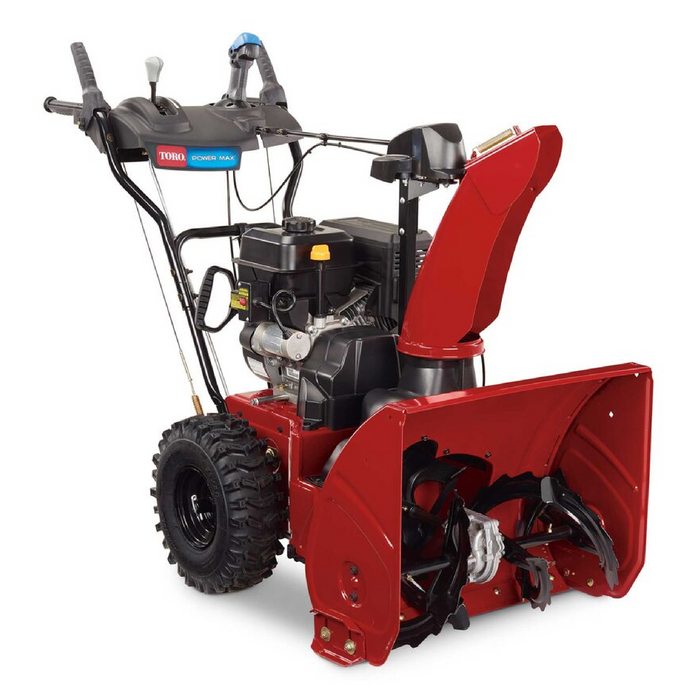
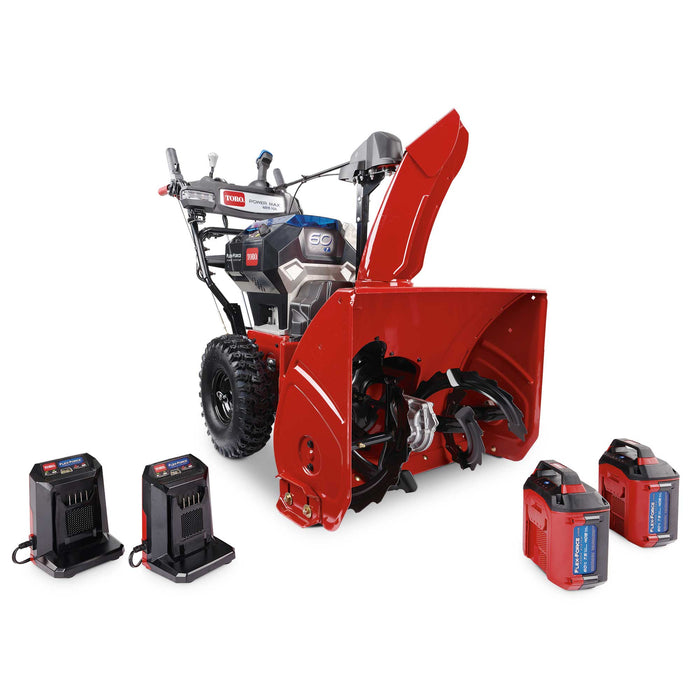
Gravel changes the decision. A machine that contacts the ground can pick up loose material. Choose a model explicitly suited to gravel and follow its manual for skid and scraper settings. The Toro Power Max two-stage examples below list both paved and gravel surfaces.
Also consider slopes, uneven sections and the route from storage to the driveway. Do not assume that any two-stage machine is suitable for every incline.
Think about the snow you actually move
A long driveway means more passes. A wider clearing path can reduce the number needed, but the machine still has to fit through gates and around parked cars. Include sidewalks and any other paths in your estimate.
Snow depth and density matter too. Fresh snow cleared promptly is a different job from deep drifts or the compacted pile left at the driveway entrance. If those tougher conditions are routine, give two-stage models a closer look.
Think about how often you can clear snow, too. If your schedule lets snow build up before you get outside, include that accumulation when comparing the work each machine needs to do.
Wet snow alone does not rule out a single-stage machine. Some Toro single-stage models are designed to handle it. Check the particular machine's intended conditions. Intake height is also different from recommended clearing depth; it is not a promise of performance in snow that deep.
Choose gas or battery separately
Stage describes how the machine moves snow. Gas or battery describes what powers it.
Gas ownership includes fuelling and engine maintenance. Battery ownership includes charging and planning around the compatible batteries you have. Check the exact product listing for what is included, and consider where you will store and charge the equipment.
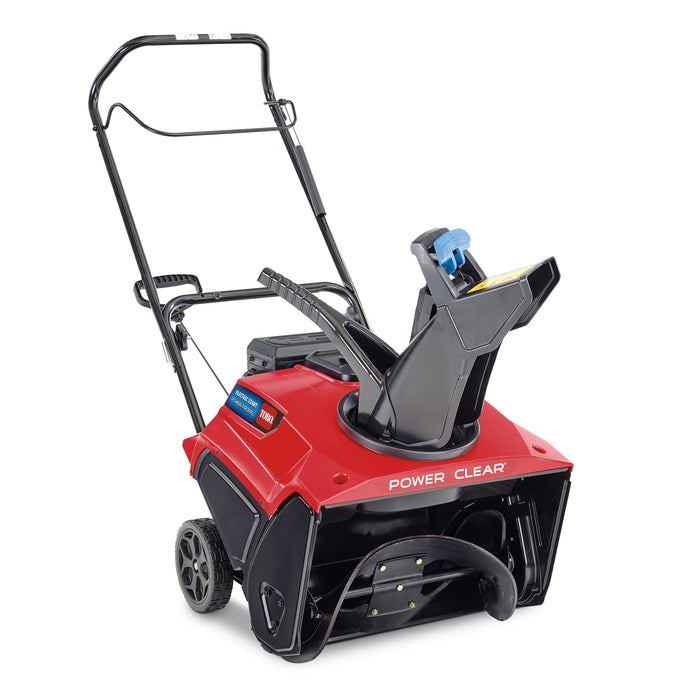
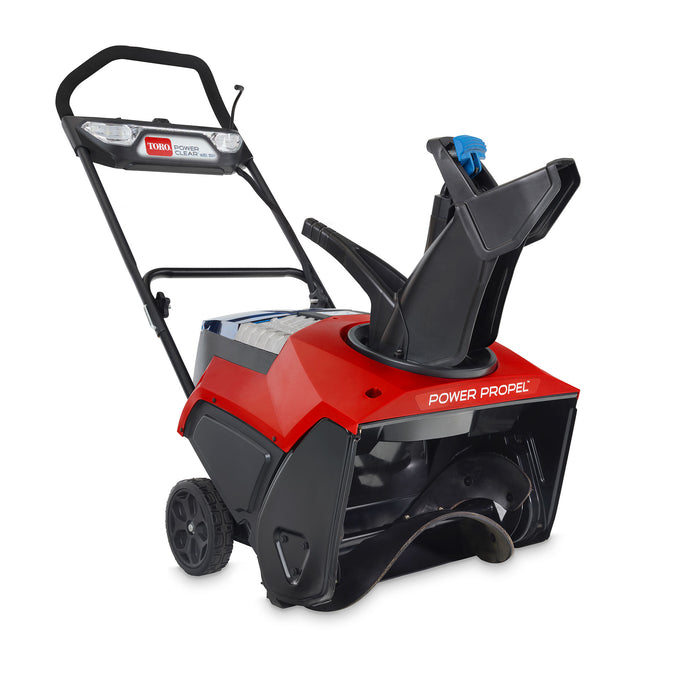
These four Toro models illustrate the choices in Interline's catalogue:
Before you choose
- Identify the surface: pavement, gravel or a mixture.
- Estimate the full area, including paths.
- Consider your usual snow depth and compacted piles.
- Measure gates, storage space and narrow passages.
- Compare controls, machine weight and power-source upkeep.
- Read the exact model's operator's manual. Never put your hands into a chute.