The practical guide
Gas vs battery snow blowers: which should you choose?
Compare the ownership routine as well as the machine. The right choice has to fit your driveway, your storage space and the way you clear snow.
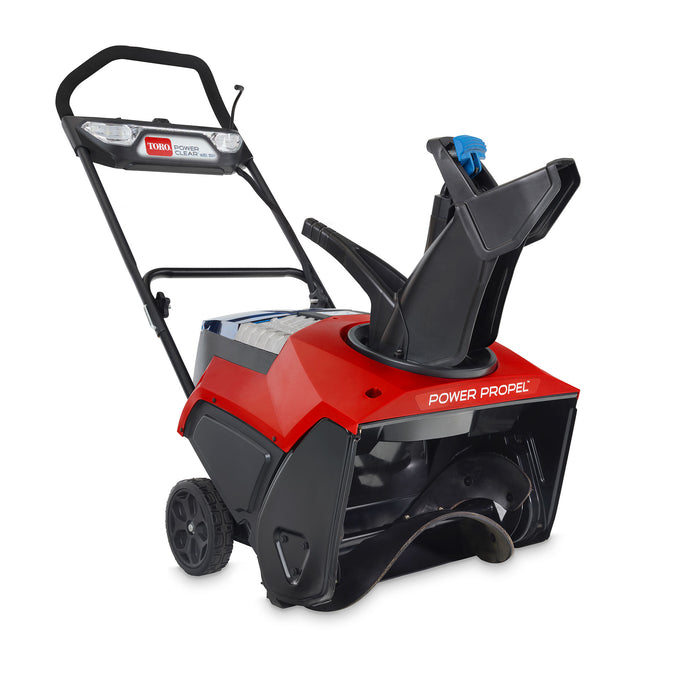
Choose the clearing capability first, then the power source. Gas and battery models both come in single-stage and two-stage designs. A battery model is not automatically a small machine, and a gas engine is not a guarantee that a model suits your driveway.
Start with the job
Measure the area you clear, note whether the surface is paved or gravel, and think about the snow you usually encounter. Include the compacted pile at the driveway entrance. Compare machines intended for those conditions before weighing fuel against batteries.
If you have not chosen a stage yet, start with our single-stage vs two-stage guide. That decision concerns how snow moves through the machine; it is separate from what powers it.
What changes in everyday use?
Scroll sideways to see the full comparison.
| Consideration | Gas | Battery |
|---|---|---|
| Getting ready | Use the specified fuel and follow the engine checks. | Have compatible batteries charged and ready. |
| Ongoing care | Engine maintenance plus care of the clearing mechanism. | Battery and charger care plus care of the clearing mechanism. |
| A longer session | Plan for safe refuelling with the engine stopped and cooled. | Plan around the available charge, compatible spare packs and charging time. |
| Storage | Follow the model's fuel and seasonal-storage instructions. | Follow the specified battery and charger storage conditions. |
Battery equipment still needs inspections and wear-part maintenance. Gas equipment must only be run outdoors, away from openings: engine exhaust contains carbon monoxide.
Compare the complete package
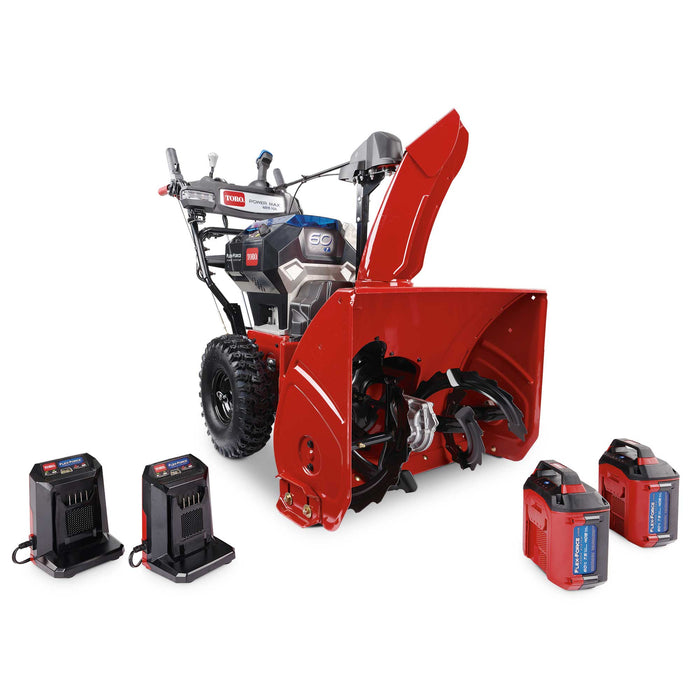
For a battery model, check the number and capacity of included packs, the charger and the manufacturer's recommended battery combination. A bare tool may cost less initially but require separate batteries and a charger. A compatible battery you already own may not deliver the runtime you need for this job.
For either power source, include maintenance supplies and storage needs in the comparison. Do not treat advertised runtime as a promise for your driveway: snow conditions and the work demanded of the machine matter.
Four catalogue examples
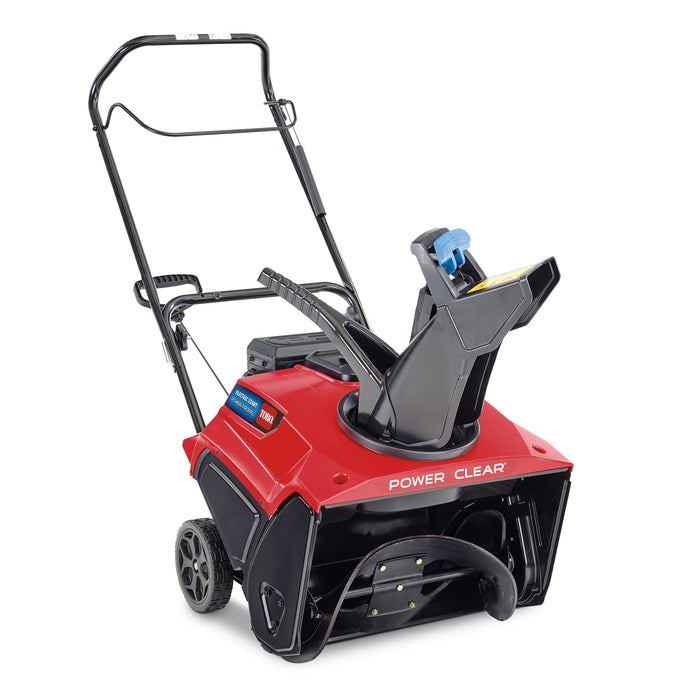
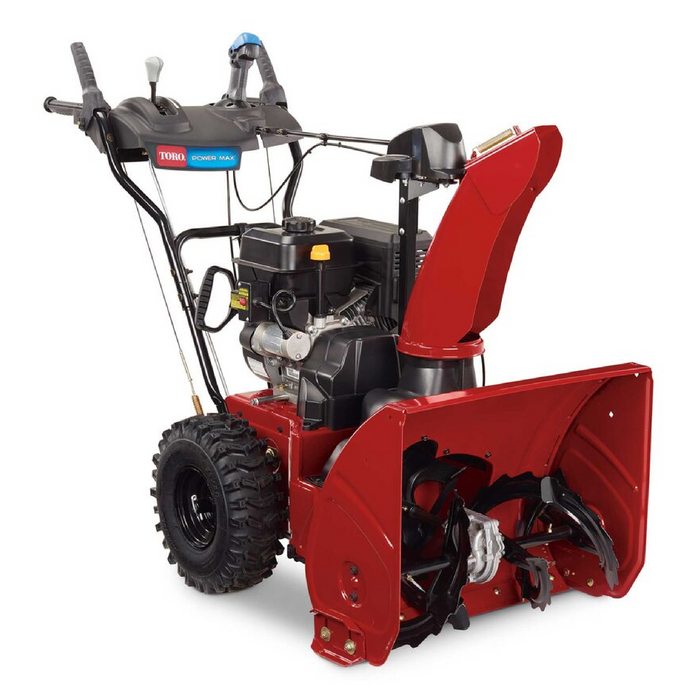
Interline lists the gas Power Clear 721 E and battery Power Clear E21 as 21-inch single-stage options. The 26-inch Power Max 826 OAE and battery Power Max e26 illustrate the two-stage choices. These are starting points for a model-by-model comparison, not a ranking.
A practical way to decide
If charging, compatible packs and the required storage conditions fit your routine, put a suitable battery model on your shortlist. If you prefer fuel-based equipment and can manage its maintenance and safe storage, compare a suitable gas model alongside it.
Read both operator's manuals before choosing. The machine that matches the surface, snowfall and operator matters more than choosing a power source in isolation.